


Membrane bioreactor municipal wastewater treatment is rapidly becoming the gold standard for urban centers seeking a reliable, sustainable, and efficient solution to their water management challenges. With growing populations and stricter environmental regulations, traditional wastewater treatment plants often fall short. This is where the advanced membrane bioreactor (MBR) system shines, offering a transformative approach that not only purifies water to an exceptional standard but also provides a host of operational advantages. This comprehensive guide will explore the profound impact of MBR technology, from its core principles to its proven applications, and reveal why it’s the ideal choice for modern municipal infrastructure.
What Is a Membrane Bioreactor? Understanding the Core Technology
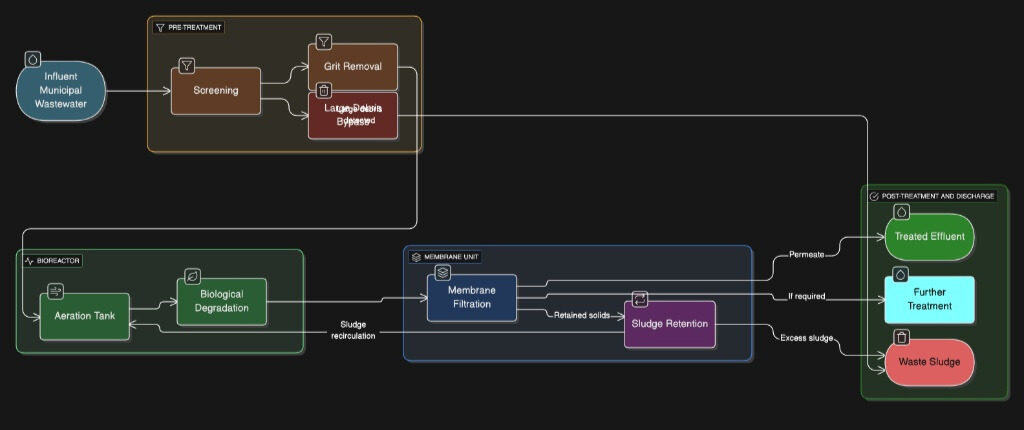
At its heart, a membrane bioreactor is an advanced wastewater treatment process that combines a biological treatment step, typically a conventional activated sludge process, with a membrane filtration step. Unlike traditional systems that rely on gravity settling in a clarifier to separate the biomass from the treated water, MBRs use microfiltration or ultrafiltration membranes to perform this critical separation. This key difference is what gives MBR technology its distinct advantages. The membranes act as a physical barrier, effectively retaining all suspended solids, bacteria, and even some viruses within the biological reactor.
The result is an exceptionally clear effluent with very low turbidity and high purity, making it suitable for direct reuse applications. The MBR process can operate at a much higher mixed liquor suspended solids (MLSS) concentration than conventional systems, which translates to a smaller footprint and a more efficient biological process. This allows for a more compact design, making it a perfect fit for land-scarce urban environments. The biological process itself can be configured to handle various pollutants, including high concentrations of carbon, nitrogen, and phosphorus, providing a comprehensive solution for diverse wastewater streams.
The membranes themselves can be configured in different ways. Submerged membranes are the most common type for municipal applications, where the membrane modules are placed directly into the activated sludge tank. This configuration is known for its energy efficiency and simplicity. The constant aeration provides both oxygen for the biological process and a scouring action to keep the membranes clean, minimizing fouling. This integrated approach simplifies the overall process train, eliminating the need for separate clarifiers and tertiary filtration steps, and streamlining the entire wastewater treatment process.
The integration of these two processes—biological treatment and membrane filtration—creates a highly robust and efficient system. The high MLSS concentration within the bioreactor enables a much longer sludge retention time (SRT), which is crucial for the growth of slow-growing microorganisms responsible for nitrification and other complex biological reactions. This enhanced biological activity ensures a more complete breakdown of organic matter and nutrients. The entire process is a prime example of how modern engineering can dramatically improve upon established methods.
The core principle is simple but powerful: instead of relying on gravity to separate solids, an MBR uses a physical sieve. This allows for a much more reliable and consistent separation process, unaffected by changes in biomass settleability, a common problem in traditional plants. The result is consistently high-quality effluent, regardless of variations in influent flow or composition. The system’s ability to maintain a stable environment for the biological community, combined with the physical barrier of the membranes, provides unparalleled performance and reliability.
MBR vs. Conventional Wastewater Treatment: A Powerful Comparison
When evaluating wastewater treatment options, municipalities must weigh the pros and cons of modern technologies against the established conventional activated sludge (CAS) process. The CAS process has been the cornerstone of municipal wastewater treatment for decades, but it comes with several inherent limitations that MBR technology addresses. The most significant difference lies in the final separation step. While CAS plants use large secondary clarifiers to settle out the activated sludge, MBRs use a membrane filtration system. This fundamental difference leads to a cascade of benefits.
The reliance on gravity settling in CAS plants makes them susceptible to “bulking sludge,” a condition where the sludge fails to settle properly, leading to poor effluent quality and potential regulatory non-compliance. MBRs, with their absolute physical barrier, are completely immune to this issue. The membranes ensure that all solids, including poorly settling ones, are retained, resulting in a consistently high-quality effluent regardless of sludge characteristics. This reliability is a major selling point for municipalities facing strict discharge limits.
Another key distinction is the footprint. Because MBRs can operate at much higher MLSS concentrations—typically 8,000 to 12,000 mg/L compared to 2,000 to 4,000 mg/L for CAS—the aeration basins can be significantly smaller. This, combined with the elimination of large secondary clarifiers, means that an MBR plant can be up to 75% smaller than a conventional plant of the same capacity. This is a critical advantage for urban areas where land is expensive and scarce.
Moreover, MBR effluent quality is far superior. While CAS effluent typically requires further treatment (tertiary filtration, disinfection) to meet stringent reuse standards, MBR effluent is often already clear, low in turbidity, and free of pathogens. This makes it ideal for immediate reuse applications like irrigation, toilet flushing, and industrial processes, reducing a city’s reliance on potable water sources. The superior effluent quality of MBR systems also provides a better and more stable feed for subsequent advanced treatment steps like reverse osmosis (RO), making MBR a preferred choice for producing Class A recycled water.
The operational differences are also noteworthy. While MBRs have a slightly higher capital cost and require a more sophisticated control system, they offer significant long-term savings in terms of land acquisition, construction, and operational efficiency. The reduced sludge production and lower disinfection costs often offset the higher initial investment over the plant’s lifecycle. Additionally, MBRs offer greater process flexibility and resilience to hydraulic and organic shocks, a common problem in municipal wastewater treatment due to fluctuating populations and weather patterns.
The comparison ultimately boils down to a choice between an old, proven technology with limitations and a modern, compact, and highly efficient solution. For municipalities committed to sustainability, superior water quality, and cost-effective operation, the membrane bioreactor municipal wastewater treatment solution is clearly the superior choice. Its ability to produce high-quality effluent for reuse while minimizing footprint and operational risk makes it the technology of the future.
7 Powerful Benefits of MBR for Municipal Wastewater Treatment
The adoption of membrane bioreactor technology in municipal settings is driven by a host of compelling advantages that address the most pressing challenges of modern wastewater management. Beyond the core benefits of superior effluent quality and a compact footprint, MBRs offer a suite of powerful benefits that make them an economically and environmentally sound choice for cities of all sizes. Let’s explore the seven most impactful benefits that set MBRs apart.
1. Compact Footprint and Scalability for Urban Environments
In densely populated urban areas, land is a precious and expensive commodity. Conventional wastewater treatment plants require vast tracts of land for clarifiers, aeration basins, and other treatment units. The MBR process, by eliminating the need for secondary clarifiers and operating at higher biomass concentrations, can reduce the required plant area by as much as 75%. This allows municipalities to build new plants or upgrade existing ones in confined spaces, such as within city limits, close to the point of water reuse, or even within existing building envelopes. The modular nature of MBR systems also allows for easy scalability, meaning plants can be expanded in phases to accommodate future population growth without disrupting existing operations. This is a crucial consideration for long-term urban planning.

This smaller footprint not only saves on land acquisition costs but also reduces the overall environmental impact of the plant. Less land disruption and a more integrated design mean a more harmonious relationship with the surrounding urban landscape. The ability to place a treatment facility closer to the point of use, such as a large industrial park or residential area, also reduces the need for extensive pumping and piping infrastructure, leading to further cost and energy savings. This compact design is a key driver for the adoption of MBR technology in an increasingly urbanized world.
2. Superior Effluent Quality and Water Reuse Potential
The most significant benefit of MBR technology is the quality of the treated water it produces. The membrane acts as an absolute physical barrier, ensuring that the effluent is virtually free of suspended solids, bacteria, and pathogens. This high-quality effluent has extremely low turbidity and is often ready for direct reuse applications without further treatment. This is a game-changer for water-stressed regions. The treated water can be used for non-potable purposes such as urban irrigation, toilet flushing, industrial cooling, and groundwater recharge.
By treating and reusing wastewater, municipalities can reduce their reliance on freshwater sources, conserve precious water resources, and mitigate the risk of water scarcity. This closed-loop approach to water management is a cornerstone of a sustainable urban water cycle. The MBR-300 package plant, for example, produces clear, low-turbidity effluent suitable for washing/irrigation and as feed for a reverse osmosis system to achieve Class A recycled water production. This opens up a world of possibilities for municipalities to become more self-sufficient in their water management.
3. Enhanced Resilience and Process Stability
Municipal wastewater plants often face a variety of challenges, including fluctuating influent flows, varying organic loads (e.g., from seasonal industries or tourism), and temperature changes. Conventional systems can struggle to cope with these shocks, leading to operational instability and potential permit violations. MBR systems, however, are exceptionally resilient. The high MLSS concentration in the bioreactor provides a large buffer, allowing the biological community to effectively dampen the effects of sudden changes in load.
The physical barrier of the membranes ensures that even during hydraulic surges, no solids are lost from the system. This guarantees consistent effluent quality under all conditions. This resilience provides municipalities with peace of mind, knowing that their wastewater treatment infrastructure will perform reliably, day in and day out, regardless of external factors. This is particularly important for municipalities subject to strict regulatory oversight and fines for non-compliance.
4. Reduced Sludge Production and Management
Sludge handling and disposal are major cost centers for any wastewater treatment plant. MBRs can significantly reduce the amount of excess sludge produced. The long sludge retention time (SRT) within the MBR tank promotes a higher degree of sludge stabilization and microbial degradation of solids. This leads to a lower net growth of biomass and, consequently, a reduction in the volume of sludge that needs to be disposed of.
A reduction in sludge volume means less money spent on dewatering equipment, transportation, and disposal fees. This can lead to substantial long-term operational savings. The MBR-300, for instance, is designed with a stable SRT via controlled wasting, optimizing sludge management and collection to handle industrial and municipal variability with ease. This thoughtful design minimizes one of the most significant operational challenges for wastewater treatment plants.
5. Lower Operational Costs and Energy Efficiency
While MBRs may have a slightly higher capital cost, they often provide significant long-term operational savings. The superior effluent quality can eliminate the need for costly tertiary treatment steps, such as sand filtration and chemical disinfection. Furthermore, the reduced sludge production and disposal costs contribute to a lower overall OPEX (operational expenditure). While membrane aeration can be energy-intensive, advancements in membrane design and system optimization, like the use of automatic chemical dosing and dedicated cleaning-in-place (CIP) regimes, are making MBRs more energy-efficient.
The ability to automate many processes with sophisticated PLC/SCADA control systems reduces the need for manual intervention and allows for more precise operation, leading to energy savings. The MBR-300’s continuous instrumentation for ORP, pH, MLSS, and DO allows for tight process control, optimizing aeration and chemical dosing for maximum efficiency. This intelligent automation contributes to both operational reliability and cost savings.
6. Odor Control and Aesthetic Benefits
Traditional wastewater treatment plants, with their large, open-air clarifiers and basins, can be a source of significant odor issues, especially in urban settings. MBR systems are typically enclosed and operate with a higher level of dissolved oxygen, which significantly reduces the production of odor-causing compounds like hydrogen sulfide. This makes them a much better neighbor for residential and commercial areas.
The compact, enclosed nature of MBR package plants, such as the MBR-300, also offers aesthetic benefits. They can be designed to blend in with the surrounding architecture, looking more like a small industrial building than a conventional treatment plant. This reduces community opposition and allows for more flexible siting options. The ability to control odors is a major factor in improving the quality of life for residents living near treatment facilities.
7. Strong Pathogen and Contaminant Removal
In an era of increasing health concerns, the ability to remove pathogens from wastewater is paramount. The sub-micron pore size of MBR membranes provides an absolute barrier against bacteria, parasites (like Giardia and Cryptosporidium), and many viruses. This physical separation is far more reliable than traditional disinfection methods like chlorination, which can be affected by changes in water quality.
The high-quality effluent produced by MBRs is a strong pathogen barrier, making it an ideal feed for further purification steps, such as reverse osmosis, to produce high-grade potable or non-potable water. This is critical for protecting public health and ensuring that recycled water is safe for its intended use. The MBR-300 is designed to provide this strong pathogen barrier, integrating seamlessly upstream of RO for Class A recycled water production.
Real-World Case Study: MBR-300 in Action
To truly understand the power of MBR technology, let’s look at a real-world example: the MBR-300 package plant. This specific system, designed by Hydrodyna, is engineered to handle municipal and high-COD industrial wastewater with a capacity of 300 m³/day. Its application is a perfect illustration of how MBR technology solves complex wastewater challenges, particularly in an urban context. The plant’s process train includes a balance tank, 1 mm fine screen, anoxic and aerobic zones, submerged hollow-fiber membranes, and post-chlorination. This thoughtful design ensures both process stability and superior effluent quality.
One of the key features of the MBR-300 is its ability to handle highly variable influent. Whether it’s fluctuating flow from a municipal network or tough, high-COD industrial wastewater from a food and beverage facility, the system delivers steady, reuse-ready effluent. The balance tank acts as a buffer, smoothing out hydraulic and load swings, while the 1 mm screen protects the downstream membranes and pumps from damage. This kind of robust pre-treatment is essential for ensuring long-term operational reliability and minimizing maintenance.
The plant’s performance metrics are a testament to MBR’s effectiveness: a proven ≥95% COD removal and ~90% total nitrogen (TN) removal. These high removal efficiencies mean the effluent meets or exceeds stringent Australian standards and local regulatory requirements. The use of submerged hollow-fiber membranes provides an absolute solids separation barrier, producing a clear, low-turbidity effluent that is ideal for washing, irrigation, and as a stable feed for advanced treatment like reverse osmosis. The MBR-300’s design assurance is validated with BioWin® dynamic modeling, a state-of-the-art tool for sizing, kinetics, and setpoint optimization. This professional validation ensures the plant will perform as designed under real-world conditions.
The system’s “Brains & Safeguards” section highlights its advanced instrumentation and control. Continuous monitoring of ORP, pH, MLSS, and dissolved oxygen allows for tight process control, ensuring optimal performance and energy use. The PLC/SCADA system with alarms and trends provides operators with the information they need to manage the plant effectively, defining operating envelopes for flux, air scour, and CIP triggers. This level of automation and control reduces the risk of human error and ensures the plant operates within its design parameters, extending membrane life and reducing OPEX.
In essence, the MBR-300 demonstrates how a well-engineered MBR package plant can provide a confident, reliable solution for demanding applications. Its compact size, proven performance, and seamless integration with other technologies make it a prime example of the kind of modular, scalable, and efficient infrastructure that municipalities need to face future water challenges. The MBR-300 isn’t just a treatment plant; it’s a comprehensive solution for sustainable water management.
Long-Term Operational Considerations for MBR Systems
While the benefits of membrane bioreactor municipal wastewater treatment are clear, successful long-term operation requires careful consideration of several factors. One of the most critical aspects is membrane fouling, a phenomenon where solids and organic matter accumulate on the membrane surface, reducing its permeability and efficiency. Proactive management of fouling is essential to maintain performance and extend membrane life.
Modern MBR systems are designed with sophisticated controls and features to mitigate fouling. This includes intermittent aeration (air scour), which dislodges solids from the membrane surface, and chemical cleaning. Regular maintenance, including a dedicated Clean-in-Place (CIP) regime, is crucial. This involves circulating cleaning solutions (like citric acid or sodium hypochlorite) through the membrane modules to dissolve fouling agents. The MBR-300’s design, for example, anticipates low fouling rates under its specified operating envelope, contributing to extended membrane life and reduced OPEX.
Another consideration is **energy consumption**, particularly related to aeration. While MBRs are more energy-efficient than older technologies, the compressors and blowers used for aeration and membrane scouring can still be significant power consumers. However, advancements in blower technology and process control, such as continuous monitoring of dissolved oxygen (DO) to precisely control aeration, are helping to reduce this energy footprint. The use of fine-bubble diffusers and smart control systems ensures that air is supplied only when and where it is needed.
Finally, operator expertise is vital. MBR systems, while highly automated, require operators who understand the underlying biological and chemical processes. Training and continuous education are essential to ensure the plant runs optimally. The PLC/SCADA control systems and alarms on modern MBR plants provide operators with the tools they need to make informed decisions and respond quickly to process changes, but a skilled operator remains a valuable asset. The MBR-300’s robust control system is a prime example of how technology can simplify operations while still requiring informed oversight.
By addressing these long-term considerations with a well-designed system, like the MBR-300, municipalities can ensure that their investment in MBR technology provides reliable, high-quality wastewater treatment for years to come. The initial design and engineering, including validation with tools like BioWin®, are critical to avoiding future operational headaches and guaranteeing sustained performance.
Implementing an MBR System: A Step-by-Step Guide for Municipalities
Implementing a membrane bioreactor municipal wastewater treatment system is a significant undertaking that requires careful planning and execution. For municipalities considering this technology, a structured approach can ensure a smooth transition and a successful outcome. The process typically begins with a detailed feasibility study. This step involves assessing the municipality’s current wastewater needs, future growth projections, and regulatory requirements. It’s also an opportunity to compare MBR technology against other options, conducting a thorough cost-benefit analysis that considers both capital and long-term operational costs.
Once the decision is made to proceed with MBR, the next phase is detailed design and engineering. This is where a company like Hydrodyna, with its in-house process design and BioWin® validation, plays a crucial role. The design phase must account for all site-specific factors, including influent characteristics, space constraints, and effluent quality goals. The process train, including pre-treatment, biological zones, and membrane configuration, must be meticulously planned to ensure optimal performance and resilience.
Following design, procurement and construction begin. This stage involves the fabrication of the MBR package plant or the construction of a custom-built facility. The modular nature of systems like the MBR-300 can significantly reduce construction time and on-site disruption. While the physical plant is being built, a parallel effort is required for operator training. Staff must be educated on the new technology, its control systems, and the maintenance protocols for the membranes and other equipment.
The final stages are commissioning and start-up. This is where the plant is brought online and its performance is tested under real-world conditions. During commissioning, the system’s various components are calibrated, and the biological process is nurtured to ensure a healthy biomass. The MBR-300’s commissioning process is a key part of Hydrodyna’s role, ensuring that the plant performs as designed and meets all performance guarantees. Once commissioned, the plant transitions to full operational status, providing a reliable and sustainable wastewater treatment solution for the community.
The Future of Wastewater Treatment: MBR and Beyond
The trajectory of wastewater treatment is moving toward more compact, efficient, and sustainable solutions, and MBR technology is at the forefront of this evolution. As global populations continue to grow and water scarcity becomes a more pressing issue, the demand for high-quality, reusable water will only increase. MBR systems, with their ability to consistently produce superior effluent, are perfectly positioned to meet this need. The integration of MBR with other advanced technologies, such as reverse osmosis and UV disinfection, is creating a new paradigm for water reclamation and reuse. This integrated approach allows for the production of everything from non-potable Class A recycled water to even potable-quality water.
The future of membrane bioreactor municipal wastewater treatment also lies in smart, automated systems. The use of advanced sensors, machine learning, and artificial intelligence will enable MBR plants to become even more efficient, predicting and preventing operational issues before they occur. These “smart plants” will optimize energy consumption, chemical dosing, and maintenance schedules, further reducing operational costs and environmental impact. The MBR-300’s use of continuous instrumentation and PLC/SCADA control is a glimpse into this future, where process control is driven by data and intelligence.
Furthermore, as regulations become more stringent, MBRs will be the go-to solution for meeting tough nutrient removal targets. The long SRT and high MLSS concentrations within the MBR process provide an ideal environment for biological nutrient removal (BNR), making it easier to meet total nitrogen and phosphorus limits. This is crucial for protecting receiving waterways from eutrophication and other forms of pollution. The innovation in MBR technology is continuous, with ongoing research into new membrane materials, module designs, and process configurations that promise even greater efficiency and reliability. The adoption of MBR is not just a trend; it’s a fundamental shift towards a more sustainable and resilient urban water infrastructure.
Quick Takeaways: Key Insights on MBRs
- Compact and Efficient: MBRs can reduce plant footprint by up to 75% compared to conventional systems.
- Superior Effluent: MBRs produce high-quality, low-turbidity effluent suitable for direct reuse.
- Operational Resilience: The systems are highly stable and can handle fluctuations in flow and organic load.
- Reduced Sludge: Longer sludge retention times lead to significantly less excess sludge production.
- Lower OPEX: Long-term savings from reduced sludge disposal and disinfection costs.
- Odor Control: Enclosed systems and high DO levels minimize odor, making them ideal for urban areas.
- Pathogen Barrier: The membranes provide a strong, reliable physical barrier against bacteria and pathogens.
Conclusion
In conclusion, the membrane bioreactor municipal wastewater treatment system represents a transformative leap forward in urban water management. By combining the best of biological treatment with the absolute barrier of membrane filtration, MBR technology delivers a powerful, compact, and highly reliable solution for municipalities worldwide. The benefits are clear: a dramatically reduced physical footprint, superior effluent quality for reuse, enhanced resilience to process shocks, and significant long-term operational savings through reduced sludge production and lower energy consumption. These advantages make MBRs not just a viable alternative to conventional plants but a superior choice for building a sustainable and resilient urban infrastructure.
The MBR-300 package plant serves as a powerful case study, demonstrating how a well-engineered system can confidently handle complex wastewater streams, meet stringent regulatory standards, and integrate seamlessly with other advanced technologies like reverse osmosis. For cities facing the dual challenges of population growth and water scarcity, MBR technology offers a clear path toward a more sustainable future. It’s a proven solution that provides peace of mind, operational efficiency, and a source of high-quality, reusable water for the community. If your municipality is looking to upgrade its water infrastructure or build a new facility, consider the overwhelming advantages of MBR technology. The future of clean water is here.
Frequently Asked Questions About MBRs
What is the typical lifespan of MBR membranes?
The lifespan of MBR membranes can vary, but with proper operation and regular cleaning (e.g., using a CIP regime), they can last 5-10 years or even longer. Factors like influent quality, operating flux, and the frequency of chemical cleaning all influence membrane life. A well-designed system, like the MBR-300, is engineered to minimize fouling and extend membrane longevity, reducing replacement costs over time.
Is MBR technology more expensive than conventional treatment?
While MBR systems often have a higher initial capital cost compared to conventional activated sludge plants, they can offer significant long-term savings. These savings come from a smaller land footprint, reduced sludge disposal costs, lower or eliminated tertiary treatment expenses, and potential revenue from water reuse. A thorough cost-benefit analysis is essential to determine the true value over the plant’s lifecycle.
Can an MBR system handle large fluctuations in wastewater flow?
Yes, MBR systems are exceptionally resilient to hydraulic and organic shocks. The inclusion of a balance tank in the process train, as seen in the MBR-300, smooths out flow variations. Additionally, the high biomass concentration in the bioreactor provides a large buffer, allowing the system to handle a wide range of influent loads without sacrificing effluent quality. This makes MBRs a reliable choice for municipal wastewater treatment.
What kind of maintenance is required for MBR systems?
Maintenance for MBR systems primarily involves routine monitoring, membrane cleaning, and mechanical upkeep. Operators must regularly check system parameters like ORP, pH, and MLSS. Membrane cleaning is a key activity, with frequent air scouring and periodic chemical cleaning-in-place (CIP) to prevent fouling. The high level of automation in modern MBRs, however, can make this process less labor-intensive.
Is the effluent from a membrane bioreactor safe for drinking?
While MBR effluent is of very high quality—low in turbidity and free of pathogens—it is not typically considered potable (drinkable) without further, advanced treatment. It is, however, highly suitable for a variety of non-potable reuse applications such as irrigation, industrial processes, and groundwater recharge. When combined with technologies like reverse osmosis and UV disinfection, MBR effluent can be further purified to meet drinking water standards, a process known as potable reuse.
