


The term “forever chemicals” has entered our collective consciousness with a jarring urgency, and at the heart of this growing public health crisis is the issue of PFAS in drinking water. Per- and polyfluoroalkyl substances (PFAS) are a vast group of synthetic chemicals, now found in the blood of nearly everyone tested. Their unique properties—resisting heat, water, stains, and grease—have made them ubiquitous in modern consumer products and industrial applications for decades. But it’s their persistence, the very characteristic that makes them so useful, that now poses a significant threat to our environment and our health. This article will provide a comprehensive guide to what PFAS are, how they contaminate our water, the health risks they pose, the new regulations being enacted, and—most importantly—what you can do to protect yourself and your family. We will delve into the science behind these compounds, explore the global regulatory landscape, and evaluate the most effective methods for removing them from your tap water.
What Are PFAS? An Introduction to “Forever Chemicals”
Per- and polyfluoroalkyl substances, or PFAS, are a family of thousands of man-made chemicals that have been in use since the 1940s. Their unique chemical structure, a carbon chain bonded with fluorine atoms, gives them a powerful resistance to water, oil, and heat. This incredible stability is what made them so attractive for use in countless industrial and consumer products, from non-stick pans and water-repellent clothing to food packaging and cosmetics. The most well-known of these compounds, PFOA (perfluorooctanoic acid) and PFOS (perfluorooctane sulfonic acid), were once key ingredients in products like Teflon and Scotchgard. However, their very strength is their greatest flaw. That carbon-fluorine bond is one of the strongest in organic chemistry, meaning these chemicals don’t break down easily in the environment or the human body. This is why they are often called “forever chemicals.”
The widespread application of these compounds has led to their pervasive presence in our world. They are found in our soil, air, water, and even in the blood of nearly every person on Earth. The Centers for Disease Control and Prevention (CDC) has conducted extensive biomonitoring studies, confirming that over 97% of Americans have detectable levels of PFAS in their blood. The scale of this exposure is a testament to how deeply ingrained these substances have become in our daily lives. While the initial focus was on PFOA and PFOS, which have largely been phased out in the U.S., a new generation of replacement PFAS, often called “GenX chemicals,” is now raising similar concerns. Understanding the fundamental nature of these chemicals is the first step in comprehending the challenge of addressing PFAS health effects and remediation.
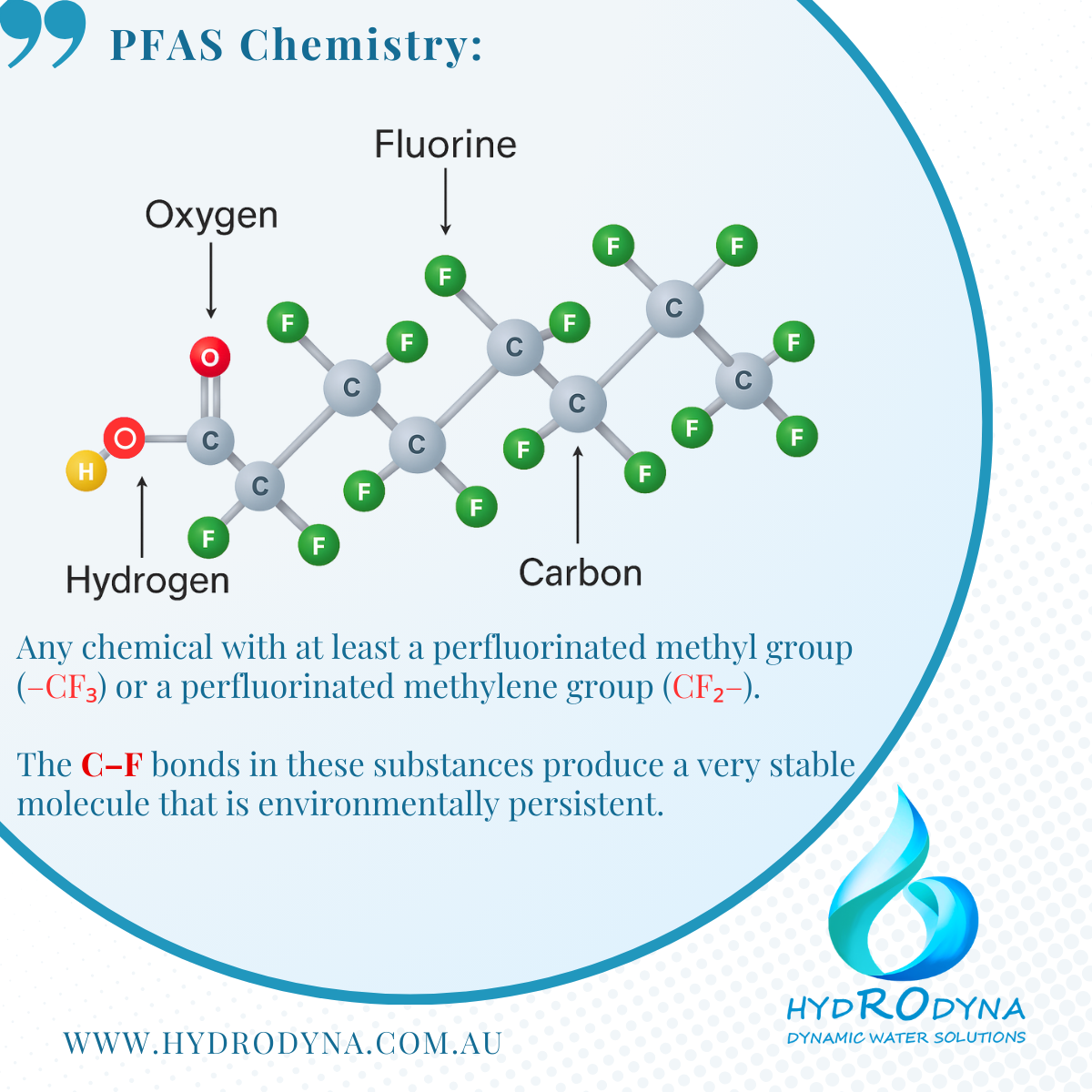
Figure 1: The molecular structure of PFAS, highlighting the incredibly stable carbon-fluorine bond. This bond is the reason these chemicals are so persistent in the environment.
Where Do PFAS Come From? Common Sources of Contamination
The journey of PFAS into our environment and, subsequently, our drinking water, is a multi-faceted process stemming from both historical and ongoing use. The primary sources of contamination can be broadly categorized into industrial releases and the disposal of consumer products. It is crucial to understand these pathways to grasp the complexity of the problem and the difficulty of containing it. These chemicals are highly mobile, easily traveling through soil and into groundwater, which is often a source for public and private drinking water wells.
Industrial Sites and Firefighting Foams
One of the most significant sources of localized PFAS contamination is the historical use of aqueous film-forming foams (AFFF). These foams were highly effective at extinguishing petroleum-based fires and were widely used at military bases, airports, and industrial facilities. The repeated use of AFFF during training exercises and emergency responses led to the saturation of soil and groundwater with high concentrations of PFAS. Today, these sites are often considered major hotspots for contamination, with plumes of “forever chemicals” spreading into nearby water sources. Furthermore, manufacturing facilities that produced or used PFAS in their processes have also been a major contributor, releasing industrial wastewater and airborne emissions that settled into surrounding areas. For more details on the industrial side of the issue, read our article on industrial PFAS pollution.
Consumer Products and Landfills
Beyond industrial sources, our everyday products contribute to the problem on a massive scale. When products like non-stick pans, waterproof jackets, and stain-resistant carpets are thrown away, they end up in landfills. Over time, precipitation and natural decomposition processes can leach PFAS from these discarded items into the landfill’s leachate, a liquid that percolates through the waste. This leachate can then contaminate nearby groundwater and surface water. Even seemingly harmless actions like washing a water-resistant jacket can release micro-plastics and PFAS into the wastewater system, which is not designed to remove these chemicals. This broad and diffuse source of contamination makes addressing the problem a challenge that goes far beyond simply targeting a few manufacturing plants.
The Health Risks of PFAS: Why We Should Be Concerned
The stability of PFAS, which makes them so useful, also means they accumulate in the human body over time. This bioaccumulation is a primary reason for concern, as even low-level, chronic exposure can lead to a build-up of these chemicals to a point where they may cause adverse health effects. Decades of scientific research have linked PFAS exposure to a wide range of health issues, leading to new, stricter regulatory standards from health agencies around the globe. The scientific consensus is growing stronger, and the evidence points to a clear need for action to protect public health.
Carcinogenic and Developmental Risks
In 2023, the International Agency for Research on Cancer (IARC), the cancer agency of the World Health Organization (WHO), classified PFOA as “carcinogenic to humans” (Group 1) and PFOS as “possibly carcinogenic” (Group 2B). This classification is a major milestone and reflects the growing body of evidence linking these specific compounds to an increased risk of certain cancers, including kidney and testicular cancer. Beyond cancer, PFAS exposure has been linked to developmental issues in children, such as low birth weight and accelerated puberty. It can also interfere with a child’s growth and learning, raising significant concerns for the most vulnerable populations.
Immune and Endocrine System Disruption
PFAS are also known to disrupt the delicate balance of our immune and endocrine systems. Studies have shown that exposure can lead to a reduced immune response to vaccines, making individuals more susceptible to infectious diseases. Furthermore, they can interfere with hormone production and function, particularly thyroid hormones, which are essential for metabolism and brain development. These endocrine-disrupting properties are a key reason for the global push to limit exposure. The cumulative effects of multiple PFAS compounds in the body, a concept known as the “Hazard Index,” is also a growing area of concern for regulators and scientists alike. The health implications of these compounds are a primary driver for the focus on safe drinking water solutions.
PFAS in Your Water Supply: How Widespread is the Problem?
The presence of PFAS is not confined to a few isolated communities. It is a global issue. Numerous studies have confirmed the widespread contamination of both surface water and groundwater sources. A recent international study found that much of the world’s source water exceeds safe drinking water guidelines for PFAS. This is a clear indication that the problem is not a minor one, but a pervasive environmental challenge that impacts millions of people worldwide. The U.S. Environmental Protection Agency (EPA) and other national agencies have been conducting extensive monitoring to quantify the extent of the problem and inform new regulatory actions.
Global and National Contamination Data
In the United States, EPA data from the Unregulated Contaminant Monitoring Rule (UCMR 5) has revealed detectable levels of PFAS in thousands of public water systems, confirming that over 170 million Americans may have drinking water with a detectable level of PFAS. While this does not mean every system is above the new legal limits, it does highlight the sheer scale of the contamination. The data also show that certain states and regions with a history of industrial activity or military installations have a higher prevalence of PFAS in their water. The interactive maps created by organizations like the Environmental Working Group (EWG) provide a sobering visual representation of the problem, showing thousands of contaminated sites across the country. This data is critical for both policymakers and individuals seeking to understand their local risks.

Understanding New PFAS Drinking Water Regulations
In response to the growing body of scientific evidence on health risks, governments around the world are finally taking concrete action to regulate PFAS. The United States has been a leader in this, with the EPA finalizing the first-ever national primary drinking water regulation for these chemicals. These new standards are legally enforceable and mark a significant step forward in protecting public health. However, it’s important to recognize that a single set of regulations won’t solve the problem overnight, and the implementation will require a monumental effort from water utilities and local governments.
New EPA Standards in the US
In 2024, the U.S. EPA established Maximum Contaminant Levels (MCLs) for six specific PFAS compounds. The new rules set a legally enforceable limit of 4 parts per trillion (ppt) for both PFOA and PFOS. For PFHxS, PFNA, HFPO-DA (GenX), and PFBS, the regulations set a Hazard Index limit of 1 for mixtures of these chemicals. This is a groundbreaking approach that acknowledges the cumulative effect of multiple compounds. Water systems now have a set timeline to monitor for these chemicals and implement treatment technologies to meet the new standards. The process of compliance will be a multi-year effort, but it represents a crucial shift from mere health advisories to enforceable law.
International Regulations and Guidelines
While the U.S. has set legally enforceable limits, other countries have also been developing their own regulations and guidelines. For example, the European Union’s Drinking Water Directive sets a limit of 100 ng/L (ppt) for the sum of 20 PFAS. Australia’s National Health and Medical Research Council (NHMRC) has also updated its health-based guideline values for drinking water, with new limits for PFOA, PFOS, and other compounds. These international efforts reflect a global understanding of the threat posed by PFAS and a shared commitment to reducing exposure. It’s clear that the global community is moving toward a future with stricter controls on these persistent chemicals. This international context underscores the global nature of the water contamination crisis.
How to Remove PFAS from Drinking Water: Effective Solutions
For individuals and communities concerned about PFAS, the good news is that there are proven and effective technologies for removing these chemicals from drinking water. While conventional water treatment processes like coagulation and sand filtration are largely ineffective, advanced methods are capable of achieving high removal rates. Understanding the differences between these technologies is key to making informed decisions, whether for a municipal water system or for your own home. The choice of technology often depends on the type and concentration of PFAS present, as well as the scale of the operation.
Proven Filtration Methods (GAC, RO, IX)
Three technologies have been identified as the most reliable for removing PFAS from drinking water: granular activated carbon (GAC), reverse osmosis (RO), and ion exchange (IX) resins. GAC systems are widely used and very effective, especially for removing longer-chain PFAS like PFOA and PFOS. They work by adsorbing the chemicals onto the surface of the carbon. RO systems use a semipermeable membrane to physically filter out contaminants, including both long- and short-chain PFAS, and are known for their broad removal capabilities. Finally, IX resins are highly effective, with a strong affinity for many PFAS compounds, especially sulfonates. These systems are often used by municipalities and can achieve very low concentrations. For more on the specifics of these technologies, consider our detailed guide on advanced water filtration technology.
Less Effective or Not Recommended Methods
It’s equally important to know which methods are not effective. Simple aeration or conventional treatment processes like chlorine oxidation and sand filtration do not break the strong carbon-fluorine bond and therefore provide little to no removal of PFAS. Boiling water also does not remove PFAS; in fact, it can concentrate the chemicals in the remaining water. Furthermore, many common pitcher filters or refrigerator filters are not certified to remove PFAS, so it is essential to check for a third-party certification from a group like NSF International. Relying on these unproven methods can give a false sense of security and fail to protect against exposure.
Choosing the Right Home Water Filter for PFAS
If you are concerned about the presence of PFAS in your tap water, investing in a home water filter can be a proactive step. When selecting a filter, the most critical factor is certification. Look for a product certified to NSF/ANSI Standard 53 (for activated carbon) or NSF/ANSI Standard 58 (for reverse osmosis). These certifications ensure that the product has been independently tested and verified to reduce specific contaminants, including PFAS. Filters come in various forms, including pitchers, faucet-mounted filters, under-sink systems, and whole-house systems. Under-sink reverse osmosis systems are generally the most effective and reliable for broad PFAS removal, including short-chain compounds. Activated carbon filters are also a great option, especially for long-chain PFAS, but they require more frequent monitoring and replacement to ensure continued effectiveness. Always follow the manufacturer’s instructions for maintenance and filter replacement to ensure the system continues to work as intended.
Long-Term Solutions and the Future of PFAS Regulation
While home filtration is an important short-term solution for individuals, the long-term solution requires a multi-pronged approach that addresses the problem at its source. This includes phasing out the production and use of non-essential PFAS, developing new and safer alternative chemicals, and investing in large-scale infrastructure to clean up contaminated sites and treat public water supplies. Many countries are already taking steps to ban or restrict entire classes of PFAS, rather than a substance-by-substance approach, which is seen as a way to prevent the regrettable substitution of one harmful chemical for another. Public advocacy and continued scientific research are also essential to keep the pressure on policymakers and industries to act responsibly.
The future will also see a greater focus on destructive technologies for treating PFAS waste. Technologies like electrochemical oxidation and supercritical water oxidation are being developed to permanently destroy PFAS in concentrated waste streams, such as those produced by RO and IX systems, rather than simply moving the problem to another location. These advanced treatment and destruction methods are key to closing the loop and truly eliminating these forever chemicals from the environment. The road ahead is long and complex, but with new regulations and emerging technologies, there is hope for a future with cleaner, safer drinking water for everyone.
- What are PFAS? PFAS are a group of over 12,000 man-made “forever chemicals” that are resistant to breakdown.
- Sources of Contamination: Major sources include industrial sites, firefighting foams, and consumer products that end up in landfills.
- Health Concerns: PFAS exposure is linked to serious health issues, including certain cancers, developmental problems, and immune system disruption.
- New Regulations: The U.S. EPA has established legally enforceable Maximum Contaminant Levels (MCLs) for six PFAS in drinking water.
- Effective Removal: Proven technologies for removing PFAS from water are Granular Activated Carbon (GAC), Reverse Osmosis (RO), and Ion Exchange (IX).
- Home Filters: Look for filters certified to NSF/ANSI standards 53 or 58 for proven PFAS removal.
- Ineffective Methods: Boiling water, conventional treatment, and many common pitcher filters do not remove PFAS.
FAQs About PFAS in Drinking Water
How do I know if my drinking water has PFAS?
The best way to know if your drinking water contains PFAS is to check your local water utility’s consumer confidence report (CCR). You can also look up your water system on the Environmental Working Group’s (EWG) interactive map. For private wells, the only way to know for sure is to have your water professionally tested for PFAS, as these wells are not subject to public water regulations. It is important to note that even with the new EPA standards, testing and reporting will be a phased process, so a lack of data does not necessarily mean your water is PFAS-free.
Is bottled water a safe alternative to tap water with PFAS?
Not necessarily. While some bottled water companies filter their water, many do not, and the bottled water industry is not regulated for PFAS with the same strictness as public water systems. Some studies have even found detectable levels of PFAS in bottled water. For this reason, using a certified home water filter is often a more reliable and cost-effective solution than relying on bottled water to avoid PFAS exposure.
Do my existing filters, like a Brita pitcher, remove PFAS?
Most standard pitcher filters or refrigerator filters are not designed or certified for PFAS removal. While some models may have a small incidental effect, they are not guaranteed to be effective. Always check the product specifications and look for a certification from NSF International or a similar third-party organization that explicitly states the filter reduces PFAS to an acceptable level. Without this certification, you cannot be sure of the filter’s performance.
Are short-chain PFAS safer than long-chain ones?
While some short-chain PFAS were initially introduced as replacements for long-chain ones and were believed to be safer, emerging research shows they also pose significant health risks. They are highly mobile in water, making them harder to contain, and can still bioaccumulate and cause adverse health effects. The EPA’s new Hazard Index for mixtures of multiple PFAS compounds addresses this concern directly, acknowledging that the combined effects of short-chain PFAS can be just as harmful as their longer-chain predecessors.
How are public water systems going to pay for PFAS treatment?
The cost of implementing PFAS treatment is substantial, and it will be a major challenge for many water utilities. The EPA has made significant federal funding available through the Bipartisan Infrastructure Law to help communities and water systems upgrade their infrastructure. Additionally, legal actions against PFAS manufacturers are ongoing, aiming to hold polluters financially accountable for the cleanup costs. This combination of federal support and legal pressure is intended to help ease the financial burden on local municipalities and, ultimately, their ratepayers.
References
- U.S. Environmental Protection Agency (EPA) – Per- and Polyfluoroalkyl Substances (PFAS)
- Environmental Working Group (EWG) – PFAS Contamination Crisis Map
- International Agency for Research on Cancer (IARC) – IARC Monographs evaluate the carcinogenicity of PFOA and PFOS
- Centers for Disease Control and Prevention (CDC) – PFAS Factsheet
- University of New South Wales (UNSW) – PFAS forever chemicals above drinking water guidelines in global source water
